










Water Management
Water Management at a Glance
MEGA manages water performance by tracking water withdrawal, water consumption and water reuse. In 2025, MEGA disclosed total water withdrawal of 96.866 ML, all from third-party water / municipal utility supply. This means the 2025 water withdrawal disclosed was not reported as surface water, groundwater, seawater or produced water.
- Total water withdrawal (surface water, groundwater, seawater or produced water)
- Water recycled and reused
- Water efficiency program, 2025
- Estimated water saving from efficient faucets
- Water risk reference
- Previous water stress classification for Samut Prakan municipal supply
Challenges and Opportunities
Water management is becoming more important as climate change, urban growth, industrial activity and changing rainfall patterns increase pressure on water resources.
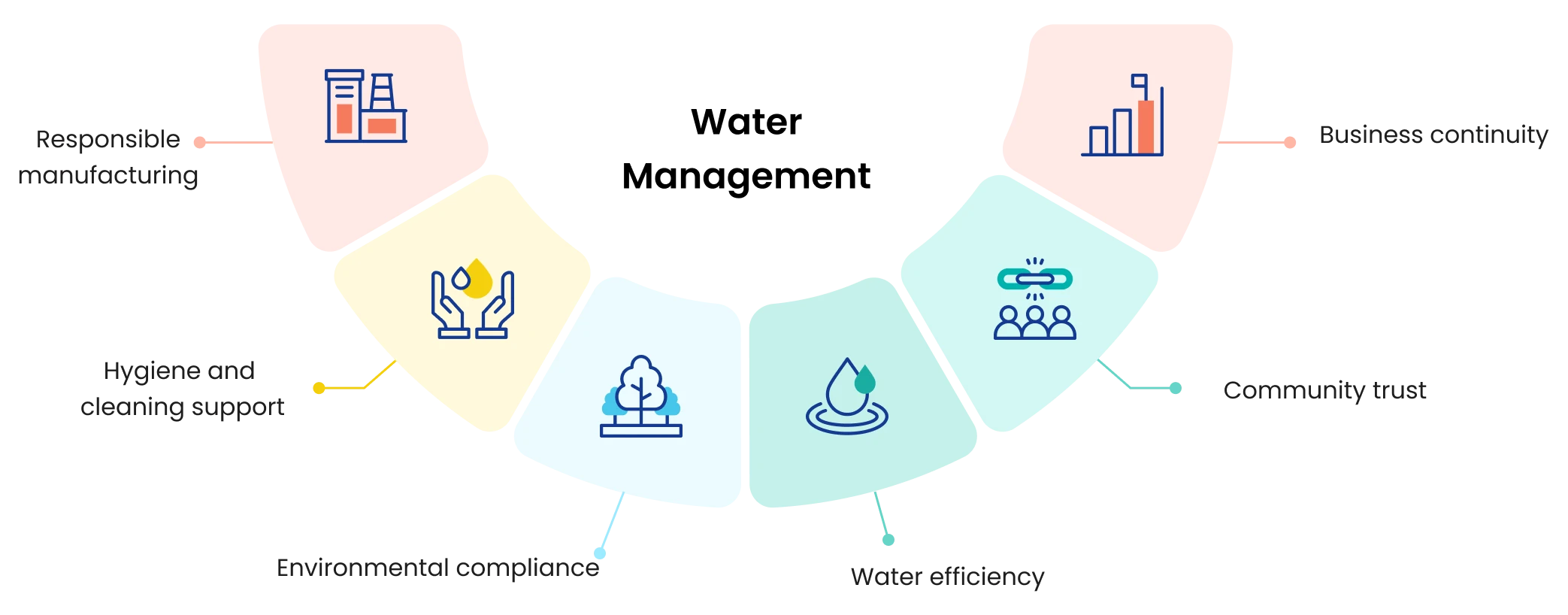
For manufacturing operations, water availability and water quality can affect production continuity, hygiene, cleaning processes, utilities and environmental compliance.
For MEGA, the challenge is to use water efficiently while maintaining product quality, workplace hygiene and operational reliability. The opportunity is to improve water stewardship through better monitoring, water-saving equipment, reuse of suitable water streams, wastewater treatment, environmental management and regular review of water-related risk
Manufacturing operations need reliable water for hygiene, cleaning, utilities and production support.
Improve water-use monitoring and identify high-use areas for efficiency improvement.
MEGA’s disclosed water withdrawal is entirely from third-party / municipal water supply.
Use water-risk screening and municipal water dependency analysis to support resilience planning.
Water stress may affect the local context of operations over time.
Use water-risk tools such as WRI Aqueduct and update water-stress assessment periodically.
Water efficiency needs to be practical at facility level.
Install efficient faucets, improve equipment and promote operational discipline.
Wastewater and water reuse require careful controls.
Reuse suitable water streams where feasible and maintain wastewater treatment-related controls.
Community and regulatory expectations on water are increasing.
Strengthen environmental compliance, regulator engagement, community relationship and transparent disclosure.
Why Water Management Matters to MEGA
MEGA’s purpose is to help people stay healthy as long as they live. Water management supports this purpose because responsible operations require reliable resources, good hygiene, environmental compliance and care for the communities around our sites.
Water also matters because it is local. The impact of water use depends on the condition of the area where water is withdrawn, consumed and discharged. This makes water different from many other environmental topics. Responsible water management must consider the facility, the local context, the source of water, the quality of wastewater, and the needs of other water users.
For MEGA, water management is therefore not only about reducing numbers. It is about improving how water is used, how water-related risks are understood, how water reuse is applied where feasible, and how MEGA continues to operate as a responsible member of the local community.
Our Water Management Approach
MEGA manages water through measurement, efficiency improvement, reuse, environmental management and risk assessment. We track water withdrawal and consumption, identify opportunities to reduce water use, and implement practical facility-level initiatives where they can improve performance.
Water management is also linked to MEGA’s environmental management system. Thailand’s main manufacturing operations are certified to ISO 14001:2015, supporting systematic environmental control, compliance and continuous improvement. This helps MEGA integrate water management with broader environmental responsibilities, including energy, waste, climate and legal compliance.
MEGA also recognizes water as a shared resource. This is why water management must be connected with local context, regulatory requirements and stakeholder expectations. Our approach is to manage water responsibly inside our operations while maintaining constructive engagement with regulators and communities through MEGA’s broader stakeholder engagement practices.
Water Withdrawal and Source
In 2025, MEGA disclosed total water withdrawal of 96.866 ML. The full amount was reported as freshwater and sourced from third-party water / municipal utility supply. No surface water, groundwater, seawater, produced water or other water source was reported in the 2025 water withdrawal table.
Five-Year Water Withdrawal and Reuse Trend
| Year | Total Water Withdrawal | Water Recycled / Reused |
|---|---|---|
| 2021 | 67.00 ML | Not disclosed |
| 2022 | 68.11 ML | 0.831 ML |
| 2023 | 86.35 ML | 1.377 ML |
| 2024 | 92.82 ML | 1.387 ML |
| 2025 | 96.866 ML | 0.86 ML |
Disclosed Target / Management Focus
MEGA continues to strengthen water management through measurement, water efficiency, reuse opportunities, wastewater-related controls, risk screening and environmental management. Our focus is to use water responsibly, reduce unnecessary consumption and improve water-related transparency

Continue measuring and disclosing water withdrawal and consumption.

Continue disclosing water withdrawal by source, including third-party / municipal utility water.

Continue identifying and implementing water-saving initiatives in operations.

Continue reusing suitable water streams where feasible and safe for operations.

Continue maintaining wastewater treatment-related controls and disclose additional treatment / discharge information where available.

Continue using water-risk screening tools and update local water-stress assessment periodically.

Continue risk assessment and analysis of groundwater usage where applicable.

Continue complying with water-related laws, reports, returns and regulatory requirements.

Continue engaging with communities and maintaining responsible operations around manufacturing sites.