











Corporate Governance

Corporate Governance at a Glance
MEGA’s corporate governance is supported by Board oversight, independent committees, policy frameworks, risk management, internal controls, compliance monitoring and transparent reporting.
- Board of Directors
- Independent Directors
- Non-Executive Directors
- Executive Directors
- Female Directors
- Board nationalities
- Board meetings in 2025
- Audit Committee
- Nomination Committee
- Sustainability, Risk Management and Corporate Governance Committee
- Anti-corruption training in 2025
- Whistleblowing cases confirmed with Audit Committee
Challenges and Opportunities
Corporate governance expectations continue to rise.
Stakeholders expect companies to show not only policies, but also clear oversight, responsible conduct, Board effectiveness, ethical business practices, anti-corruption controls, risk management, transparent reporting and mechanisms to raise concerns.
For MEGA, the challenge is to maintain strong governance across a business that operates in many markets and engages with employees, suppliers, customers, healthcare professionals, regulators, investors and communities. Different regulations, operating environments, business relationships and emerging risks require governance that is practical, consistent and continuously reviewed.
The opportunity is to make governance a source of resilience. When decision-making is transparent, risks are identified early, policies are communicated, concerns can be raised safely, and accountability is clear, MEGA can protect stakeholder trust and support long-term value creation.
Ethical and anti-corruption risks can arise across markets and business relationships.
Strengthen Anti-Bribery Policy, corruption risk assessment, training, CAC certification, whistleblowing and non-retaliation mechanisms.
ESG, climate, cyber, data privacy and operational risks are increasingly connected.
Link Board oversight, risk management, internal controls, business continuity and cyber security governance.
Investors and regulators expect accountable Board composition and performance.
Disclose Board independence, gender composition, skills, committee roles, self-assessment and succession planning.
Employees and affected persons need safe channels to raise concerns.
Maintain reporting channels, investigation procedures, Audit Committee reporting and non-retaliation protection.

Why Corporate Governance Matters to MEGA
MEGA’s business is connected to human health. This makes governance more than a compliance requirement. It is part of how we protect product quality, stakeholder trust, ethical conduct, business continuity and long-term growth.
Strong governance helps MEGA make better decisions in a changing operating environment. It supports the Board and management in overseeing strategy, risk, sustainability, compliance, internal control, anti-corruption, customer responsibility, supplier conduct, information security and responsible operations.
Corporate governance also supports the way we work with stakeholders. Shareholders need transparent information and fair treatment. Employees need clear expectations and safe reporting channels. Customers and healthcare professionals need responsible product information and ethical business conduct. Suppliers need fair and responsible business relationships. Communities and regulators need confidence that MEGA operates with integrity.
Our Corporate Governance Approach
MEGA’s corporate governance approach is built on Board oversight, management accountability, clear policies, internal controls, risk management, compliance monitoring and transparent communication.
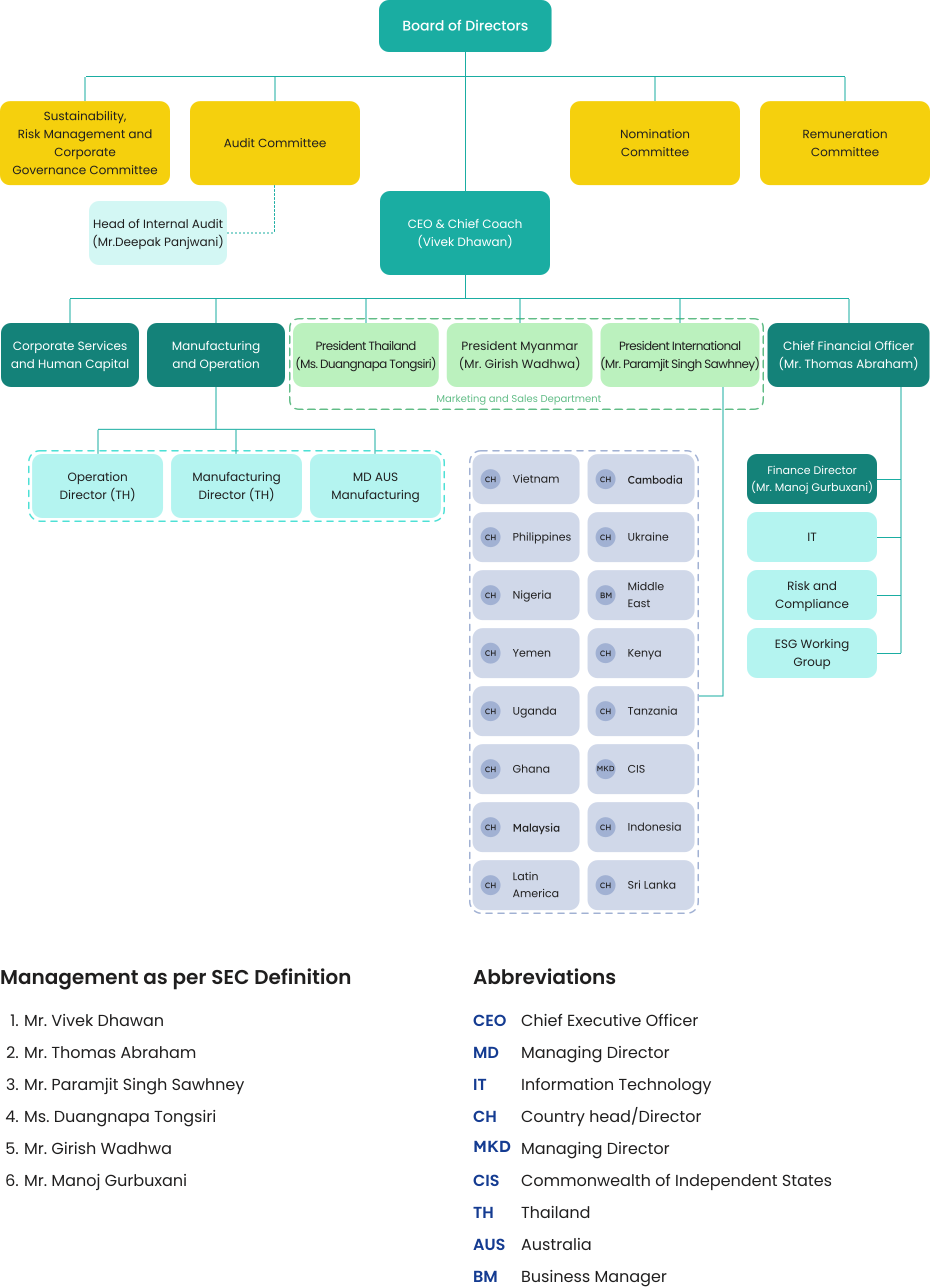
The Board of Directors is responsible for strategy and oversight of the Company’s performance. Board members bring diverse skills and experience across areas such as pharmaceuticals, advertising, marketing, shipping and logistics, cyber-security and sales software, investment advisory, finance, consumer health and banking. This combination of experience helps MEGA oversee business performance and sustainability in a complex operating environment.
The Board is supported by committees with defined charters and responsibilities. Each committee plays a role in strengthening governance, internal control, audit, nomination, remuneration, sustainability, risk management and corporate governance.
Moreover, MEGA also uses a policy suite to guide conduct across the Company. The Business Ethics and Code of Conduct serves as the foundation document for MEGA’s policies and helps align governance, strategy and operations with integrity, compliance and responsible business conduct.
Board Oversight and Governance Structure
The Board of Directors plays a central role in MEGA’s governance and strategy. The Board oversees the Company’s performance, reviews policies, contributes to policy development, undertakes self-evaluation and supports the long-term direction of the business.
MEGA has a well-defined Authorization Table that lays down authority limits for the Board of Directors, Executives and Senior / Middle Management. The Company follows a detailed process for approvals from the Board of Directors and for sharing significant events.
The quorum for a meeting of the Board of Directors consists of at least two-thirds of the total number of directors. At the time the Board of Directors votes, at least two-thirds of the total number of directors must be present.
The Board meets regularly. In 2025, the Board of Directors held 8 meetings. The Audit Committee meets at least four times a year, while other committees meet at least twice a year. Committee charters define roles and responsibilities so that each committee can support the Board in its area of oversight.
Meetings Attended in 2025
| No. | Name - Surname | Board of Directors Position | Audit Committee Position | Nomination Committee | Remuneration Committee | Sustainability. RM & CG committee |
|---|---|---|---|---|---|---|
| 1. | Mr. Mechai Viravaidya | 05/08 (63%) | ||||
| 2. | Mr. Alan Kam | 06/08 (75%) | 03/04 (75%) | 02/02 (100%) | ||
| 3. | Mr. Thor Santisiri | 07/08 (88%) | 04/04 (100%) | 02/02 (100%) | ||
| 4. | Mr. Vijay Karwal | 08/08 (100%) | 04/04 (100%) | 02/02 (100%) | ||
| 5. | Dr. Nithinart Sinthudeacha | 08/08 (100%) | 02/02 (100%) | 02/02 (100%) | ||
| 6. | Mr. Kirit C. Shah | 08/08 (100%) | 02/02 (100%) | |||
| 7. | Mr. Ishaan Shah | 07/08 (88%) | ||||
| 8. | Ms. Sameera Shah | 06/08 (75%) | ||||
| 9. | Mr. Shiraz E. Poonevala | 08/08 (75%) | ||||
| 10. | Mr. Vivek Dhawan | 08/08 (100%) | 02/02 (100%) | 02/02 (100%) | ||
| 11 | Mr. Thomas Abraham | 08/08 (100%) | 02/02 (100%) |
Remark
- Mr. Mechai Viravaidya (resign 24 Feb. 2026)
- Mr. Alan Kam (Feb. 25, 2026 holds Chairperson of the Board of Directors)
- Dr. Nithinart Sinthudeacha (Feb. 25, 2026 holds Vice-Chair of the Board of Directors)
- Mr. Thor Santisiri (not intend to offer for re-election after Apr. 3, 2026)
- Mr. Ramachandran Rajamanickam ( Feb. 25, 2026 holds an Independent Director)
- Mr.Plakorn Wanglee (Apr. 3, 2026 holds an Independent Director)
Board Composition, Diversity and Skills
MEGA values a Board composition that supports effective oversight and long-term business strategy. In 2025, the Board of Directors comprised 11 directors, including 5 Independent Directors, 4 Non-Executive Directors and 2 Executive Directors. The Board included 2 female directors, one Independent Director and one Non-Executive Director, and comprised directors from more than three nationalities.
The Board brings together different experiences and perspectives. MEGA’s Board members have relevant experience in strategy, industry knowledge, accounting and finance, risk management, corporate governance and ESG. The Board also includes experience across pharmaceuticals, advertising, marketing, shipping and logistics, cyber-security and sales software, investment advisory, finance, consumer health and banking.
| No. | Name of Directors | Strategy | Industry Knowledge | Accounting and Finance | Risk Management | Corporate Governance | ESG |
|---|---|---|---|---|---|---|---|
| 1. | Mr. Mechai Viravaidya, Chairman and Independent Director | ||||||
| 2. | Mr. Alan Kam, Independent Director | ||||||
| 3. | Mr. Thor Santisiri, Independent Director | ||||||
| 4. | Mr. Vijay Karwal, Independent Director | ||||||
| 5. | Dr. Nithinart Sinthudeacha (Ms.) Independent Director | ||||||
| 6. | Mr. Kirit C. Shah, Non-executive Director | ||||||
| 7. | Mr. Ishaan Shah, Non-executive Director | ||||||
| 8. | Ms. Sameera Shah Non-executive Director | ||||||
| 9. | Mr. Vivek Dhawan, Executive Director | ||||||
| 10. | Mr. Thomas Abraham, Executive Director | ||||||
| 11. | Mr. Shiraz E. Poonevala, Non-executive Director |
MEGA will continue to consider Board composition, diversity, skills and experience through the Nomination Committee and Board succession planning process. The Nomination Committee screens Board composition and encourages a strategically appropriate composition for the Company’s business and industry.
Board Composition
| Board Category | Male | Female | Total |
|---|---|---|---|
| Independent Directors | 4 | 1 | 5 |
| Non-Executive Directors | 3 | 1 | 4 |
| Executive Directors | 2 | 0 | 2 |
| Total | 9 | 2 | 11 |
Board Committees and Responsibilities
MEGA’s Board Committees support the Board by reviewing matters in greater detail and providing recommendations within their areas of responsibility.
The Audit Committee is composed of three Independent Directors. The Committee is responsible for internal controls, appointment of external auditors, compliance, risk management and other controls necessary for the business. The Audit Committee also oversees internal and external audit matters and reviews observations and risks highlighted during audits.
The Nomination Committee is composed of Independent Directors. The Committee screens Board composition and encourages a strategically appropriate Board structure for MEGA’s business and industry. The Committee considers candidates from industry partners, professional search firms and diverse contacts, and ensures that roles are recommended for Board members based on their strengths and expertise. It also reviews Board and employee diversity, succession planning and training.
The Remuneration Committee benchmarks Board remuneration with available industry surveys, including IOD remuneration surveys, and reviews and approves management remuneration guidelines. Director remuneration is approved by shareholders at the Annual General Meeting.
The Sustainability, Risk Management and Corporate Governance Committee oversees sustainability in business practices, the risk management process and corporate governance practices. The Committee reviews sustainability initiatives, risk registers, policy implementation, corporate governance practices, business ethics, anti-bribery policy, director development and self-assessment.
| Responsibility Area | Audit Committee | Nomination Committee | Remuneration Committee | Sustainability, Risk Management and Corporate Governance Committee |
|---|---|---|---|---|
| Internal control | ||||
| External and internal audit | ||||
| Board composition and diversity | ||||
| Succession planning | ||||
| Director and management remuneration | ||||
| Sustainability oversight | ||||
| Risk management oversight | ||||
| Corporate governance policies | ||||
| Business ethics and anti-bribery |
Risk Management and Internal Controls
MEGA’s governance approach is connected to risk management and internal control. The Board of Directors and the Audit Committee oversee internal controls, while the Sustainability, Risk Management and Corporate Governance Committee reviews risk management and risk registers.
MEGA has a Risk Appetite Statement as a foundational document for risk management. The Company identifies key risks in consultation with locations where it operates, and each location head is considered a risk owner. The risk mitigation plan is followed up to ensure that risks are addressed and residual risks are managed as planned.
MEGA’s internal control framework is based on the Committee of Sponsoring Organizations (COSO). The Board of Directors and the Audit Committee oversee internal controls, and the Company outsources internal audits to third-party consulting companies.
The Company identifies climate change, data privacy, cyber preparedness and intellectual property as key emerging risks. This reinforces the need to connect governance with ESG, cyber security, business continuity and long-term resilience.
Compliance Department
Compliance Department The company has established an Compliance Department to play a crucial role in ensuring that the company operates within the boundaries of laws, regulation and internal policies. Also communicate with related stakeholders and regulators.
Mr. Deepak Panjwani, Head of Compliance Department and Chief of Compliance & Risk Officer can be contacted at +66 2 769 4203 or deepak@megawecare.com
Shareholder Rights and Transparent Communication
MEGA respects shareholder rights and equitable treatment of shareholders. The Board of Directors and management consider it a priority to protect and uphold shareholder rights irrespective of the size of shareholding.
Shareholders have the right to participate in shareholder meetings, appoint proxies, vote for appointment or removal of individual directors, vote on appointment and remuneration of external auditors, vote on specific business matters, receive dividends and receive accurate and timely information.
MEGA also maintains an Investor Relations function to communicate and provide information about the Company’s data and operations to investors, shareholders, analysts and relevant agencies.

Board Evaluation, Succession and Development
MEGA arranges annual assessment and review of the Board of Directors and committees using the Stock Exchange of Thailand’s self-assessment guidelines. The assessment covers Board structure and characteristics, roles and responsibilities, Board meetings, Board performance, relationship with management, self-assessment of the Board, committees, individual directors and senior management, and self-development.
In 2025, the Board resolved to revise the performance assessment forms for the Board of Directors as recommended by the Corporate Governance and Sustainability Committee. The revision covered both collective performance and self-assessment forms and aimed to improve assessment effectiveness and alignment with current circumstances.
MEGA also maintains succession planning for directors and key executives. The Nomination Committee reviews succession plans for management and the Board of Directors, and the Board ensures systematic nomination of suitable candidates to replace directors or top executives when needed.
Director and management development also remains important. Board members, management and the Corporate Secretary have attended relevant director certification and governance-related programs, while MEGA continues to encourage directors and key executives to attend professional development programs.
| Assessment Area | Latest Disclosed Score | |
|---|---|---|
| Score | Percentage | |
| Self Assessment of Board of Directors | 3.78 | 94.5% |
| Self Assessment of Committee as a whole | 3.80 | 95.0% |
| Self Assessment of Committee members on individual basis | 3.91 | 97.7% |
| Questions with score less than 80% | None | |


Remuneration Governance
MEGA’s Remuneration Committee reviews Board and management remuneration with reference to roles, responsibilities, Company performance and market benchmarking. The Committee benchmarks Board remuneration with available industry surveys, including IOD remuneration surveys.
Director remuneration is paid in quarterly installments and approved by shareholders at the Annual General Meeting. Executive Directors declined to accept remuneration as Directors.
The Remuneration Committee also reviews management compensation and guidelines for salary increments for key businesses. This helps ensure that remuneration is reviewed through a defined process and aligned with responsibilities and Company performance.

Disclosed Target / Management Focus
MEGA’s governance focus areas are connected to Board effectiveness, policy oversight, ethics, anti-corruption, risk management, internal controls, training and transparent reporting.

Continue Board oversight of strategy, performance, governance, risk management, internal control and sustainability.

Continue reviewing Board structure, independence, diversity, skills, training and succession planning through the Nomination Committee.

Continue annual Board and committee self-assessment and improve assessment forms and processes where appropriate.

Target employees heading business dealings or interfacing with customers, government and regulatory agencies in 2026 and 2027.

Continue maintaining internal controls based on the COSO framework and using third-party internal audit support.

Continue supplier audits and governance expectations covering Good Manufacturing Practices, Human Rights and Employee Health and Safety.

Continue public disclosure through the Sustainability Report, Form 56-1 One Report, governance dashboard and investor communication.
Whistleblowing
Report malpractice concerning unlawful conduct, corruption, and non-compliance with Mega Lifesciences Public Company Limited’s policies on code of conduct, corporate governance, and regulations of the Company.
The whistleblowing is required to submit factual information and must report in good faith with no malicious intent and not incriminate others without sufficient evidence. Whistleblowing will be given appropriate protection and will be kept confidential.
Your questions and comments are important to us. Please use the form below to contact us and we will get back to you as soon as possible.
Related Documents
Chief Executive Officer and Director Performance Evaluation