












Cybersecurity

Cybersecurity at a Glance
MEGA manages cybersecurity through governance oversight, standards-aligned procedures, technology controls, employee awareness, security testing and recovery planning. These elements help protect stakeholder information, strengthen business continuity and support responsible digital operations across the Company.
- Governance reporting
- Cybersecurity leadership
- Standard alignment
- Cyber awareness training
- Core controls
- Detection and response
- Security monitoring
- Security testing
- Target architecture
Challenges and Opportunities
Cyber threats are becoming more sophisticated as business systems, third-party connections, cloud platforms and digital health solutions become more connected.
For MEGA, a cyber incident can affect more than technology. It can disrupt business continuity, expose personal or business data, affect stakeholder confidence and create regulatory or reputational impact.
The opportunity is to build cybersecurity into the way MEGA grows. Stronger access controls, employee awareness, security monitoring, stress testing, backup systems and disaster recovery planning help MEGA protect information while supporting digital operations, customer engagement and future innovation.
Cyber threats are becoming more sophisticated.
Strengthen multi-layered controls, detection and response, endpoint protection and security monitoring.
Business data, product data and personal data must be protected.
Apply data protection controls, restricted data use, vendor safeguards and cyber security measures.
Digital systems and third-party connections can increase exposure.
Use cloud security obligations, access control, vendor restrictions and infrastructure audits.
Employees can be exposed to phishing, email threats and unsafe digital behavior.
Continue cyber awareness training, email security and responsible use of information systems.
Business disruption may arise from cyber incidents or system failure.
Maintain immutable backups, disaster recovery plans, stress testing and resilience planning.
Stakeholders expect clearer governance of cyber risk.
Report cyber preparedness to the Board of Directors and Sustainability, Risk Management and Corporate Governance Committee.

Why Cybersecurity Matters to MEGA
MEGA’s business depends on trust, continuity and responsible use of information. We handle information across many stakeholder groups, including employees, suppliers, government entities, distributors, shareholders, customers and business partners. When this information is protected, MEGA is better able to operate with integrity and maintain confidence in the way we conduct business.
Cybersecurity also supports MEGA’s digital direction. Digital health applications, cloud-based systems, business platforms and third-party service providers create new opportunities, but they also require stronger controls over data, access, systems and recovery.
Our Cybersecurity Approach
MEGA manages cybersecurity through a combination of governance, technology controls, employee awareness and resilience planning. Cyber preparedness is reported to the Board of Directors and the Sustainability, Risk Management and Corporate Governance Committee, while the Information Technology and Cyber Security teams are headed by the Chief Information Officer.
The Company has, or is in the process of ensuring, that important cybersecurity elements are in place. These include Standard Operating Procedures aligned with ISO 27001, Multi-Factor Authentication, Managed Detection and Response, immutable offline data backup systems, cloud-based solutions with shared security obligations, email security, employee training and awareness, a Security Operation Center, internal and external security audits, stress testing and disaster recovery plans.
MEGA also aims to build a Zero Trust Network Architecture with data protection controls. This direction supports a stronger cybersecurity environment as the Company continues to manage business data, personal data, digital systems and stakeholder information.
Cybersecurity Governance and Accountability
Cybersecurity governance at MEGA connects technology responsibility with Board-level oversight. Cyber preparedness is reported to the Board of Directors and the Sustainability, Risk Management and Corporate Governance Committee. The Information Technology and Cyber Security teams are headed by the Chief Information Officer, who supports coordination of infrastructure investment, security controls, cyber monitoring, employee awareness and recovery planning.
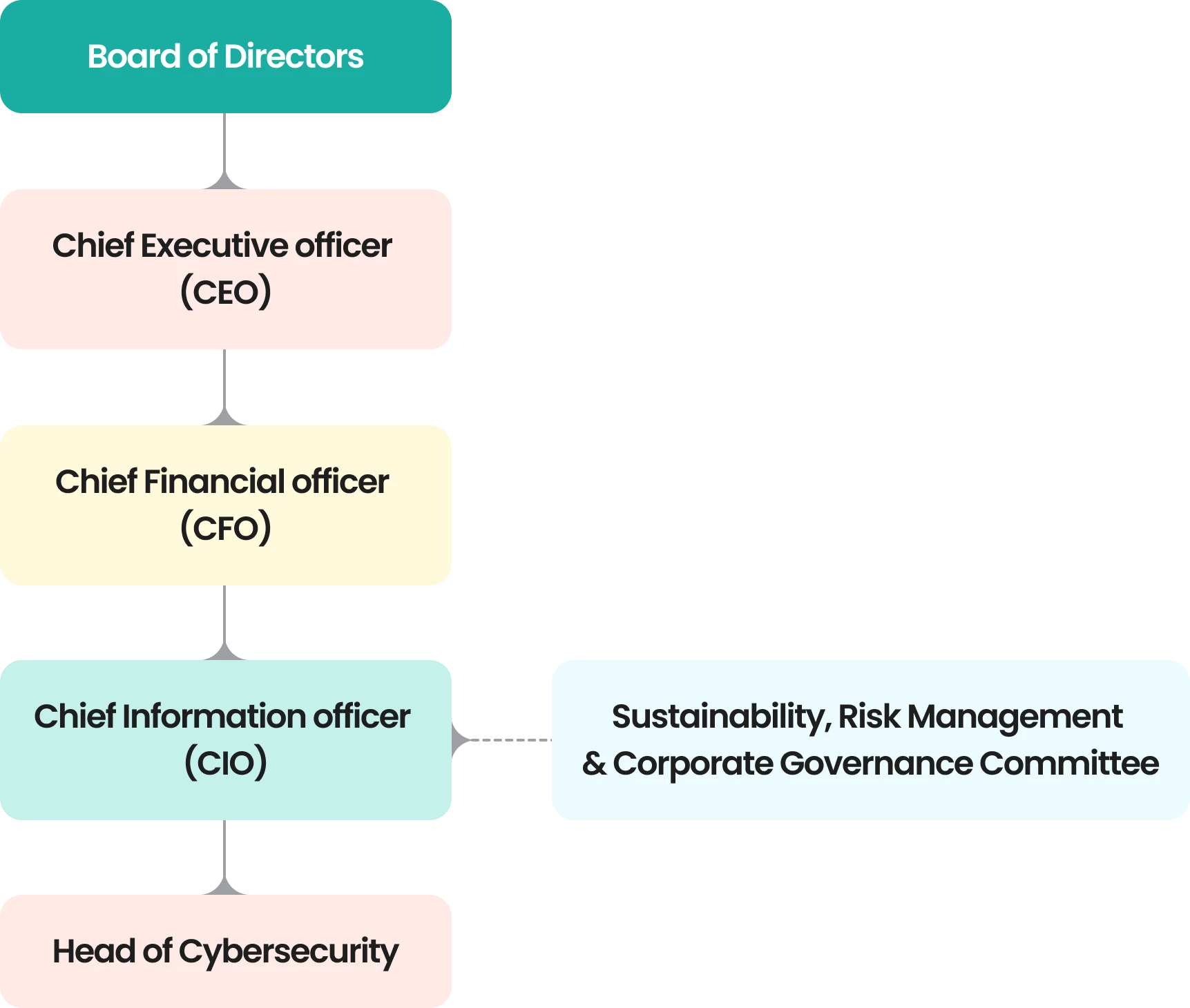
Roles & Responsibility of Head of Cybersecurity
- Develop and execute the Information Security strategy aligned with business goals.
- Establish and enforce ISO 27001-aligned security policies, standards, and best practices.
- Manage security risks, compliance, and security architecture across regions and business units.
- Oversee security operations, incident response, and cyber resilience to protect critical assets.
- Promote security awareness and foster a strong security culture across the organization.
Standards Alignment and Security Procedures
MEGA’s cybersecurity approach is supported by Standard Operating Procedures aligned with ISO 27001. This helps organize information security expectations, controls and procedures in a disciplined manner.
MEGA should communicate this point carefully. The Company discloses SOPs aligned with ISO 27001, while certification may be procured at management’s discretion. Therefore, the website should not state that MEGA is ISO 27001 certified unless certification has been obtained and publicly confirmed.
Multi-Layered Cybersecurity Measures
MEGA protects its systems through multiple cybersecurity controls covering access management, email and endpoint security, monitoring, backup and recovery, security testing and continuous improvement. These controls help reduce exposure, detect threats, protect business and personal data, and support system resilience.
Multi-Layered Cybersecurity Controls

Layer 1: Identity and Access
Multi-Factor Authentication / access controls

Layer 2: Email and Endpoint Security
Email security, endpoint response and virus protection

Layer 3: Network and System Monitoring
Security Operation Center, firewall monitoring and Active Directory monitoring

Layer 4: Backup and Recovery
Immutable offline data backup systems and disaster recovery plans

Layer 5: Testing and Continuous Improvement
Internal and external security audits, stress testing and review of security controls
Data Protection and Stakeholder Information
Cybersecurity at MEGA is closely connected to data protection. The Company handles data relating to employees, customers, products, suppliers, government entities, distributors and shareholders. Personal data and business data must be protected from unauthorized access, misuse, leakage, theft or loss.
MEGA has a Data Privacy Policy and framework, a policy for restricted use of data in the Company’s possession, and restrictions in agreements with vendors to safeguard MEGA’s proprietary data. Stress testing and infrastructure audits by third parties also support the protection of information systems.
Cyber Preparedness, Security Audits and Stress Testing
Cyber preparedness must be tested, not only designed. MEGA has disclosed internal and external security audits and stress testing as part of its cybersecurity management. The Company also uses stress testing and infrastructure audits by third parties to help assess preparedness and strengthen controls before a serious incident occurs.
Where the current website refers to Vulnerability Assessment and Penetration Testing for the Consolidation App, this may be used as an example of vulnerability assessment and penetration testing disclosed on the existing website. The upgraded page should not expand this into a company-wide vulnerability assessment and penetration testing claim unless MEGA confirms the full scope internally.
Monitoring, Detection and Response
MEGA’s cybersecurity approach includes Managed Detection and Response, multi-point defense, endpoint response systems and a Security Operation Center covering firewall monitoring and Active Directory monitoring. These capabilities help MEGA identify suspicious activity, protect systems and support timely response when threats are detected.

Backup, Disaster Recovery and Business Continuity
Cybersecurity is part of business continuity. MEGA has immutable offline data backup systems and disaster recovery plans, and locations are directed to prepare disaster recovery and crisis plans for natural disasters, political events or pandemic situations
Immutable offline backups help protect data recovery capability in the event of ransomware or other disruptive cyber events. Disaster recovery planning also helps MEGA restore operations when unexpected events affect systems, infrastructure or business continuity.


Disclosed Target / Management Focus
MEGA continues to strengthen cybersecurity as part of its governance, risk management and business continuity practices. Our focus is to protect stakeholder information, improve cyber preparedness, strengthen security controls, and ensure that digital systems remain reliable as the business continues to grow.

Continue reporting cyber preparedness to the Board of Directors and Sustainability, Risk Management and Corporate Governance Committee.

Continue cybersecurity management under the Information Technology and Cyber Security teams headed by the Chief Information Officer.

Continue maintaining Standard Operating Procedures aligned with ISO 27001 and consider certification at management’s discretion.

Continue strengthening identity and access controls, including Multi-Factor Authentication and related security measures.

Continue strengthening Managed Detection and Response, multi-point defense, endpoint response and Security Operation Center monitoring.

Continue applying Data Privacy Policy, restricted data use, vendor safeguards and data protection controls.

Continue internal and external security audits, stress testing and infrastructure audits by third parties.

Continue maintaining immutable offline data backup systems and disaster recovery plans

Continue cyber awareness training and responsible use of information systems

Continue progressing toward Zero Trust Network Architecture with data protection controls

Continue linking cyber preparedness with disaster recovery, crisis plans and business continuity management
