










Human Rights

Human Rights at a Glance
- Units covered by Human Rights Due Diligence process
- Location heads signed the Human Rights Declaration
- Significant human rights issues during the year
- Tier-1 suppliers evaluated in 2025
- Human rights training
Challenges and Opportunities
Human rights expectations are increasing across global business. Companies are expected to understand how their operations and supply chains may affect people, prevent potential harm, provide safe and fair working conditions, and offer channels for people to raise concerns.
For MEGA, the challenge is to manage human rights consistently across countries, operations, suppliers and business relationships. Different labour laws, regulatory expectations, business environments and supplier practices require a structured approach.
The opportunity is to strengthen trust. By respecting human rights, MEGA supports employee well-being, responsible supply chain management, product quality, customer confidence, ethical business conduct and long-term business resilience.
Operations across many countries with different labour requirements.
Strengthen consistent human rights expectations across MEGA’s operations.
Supplier and value chain exposure.
Improve supplier screening, audits and corrective actions.
Increasing stakeholder expectations on human rights due diligence.
Build trust through transparent disclosure and stronger governance.
Need for safe and fair workplaces.
Support employee well-being, engagement and productivity.
Ethics, privacy and non-retaliation expectations.
Strengthen responsible business conduct and grievance channels

Why Human Rights Matters to MEGA
MEGA’s purpose is to help people stay healthy as long as they live. This purpose cannot be separated from respect for people. Human rights matter to MEGA because our business depends on people across the value chain, employees, contractors, suppliers, healthcare professionals, customers, consumers and communities.
Human rights are also part of MEGA’s material sustainability topics. MEGA identifies Human Rights as a material topic under the Social Dimension, with a focus on conducting human rights risk assessment within the Company and in supplier workplaces.
Respect for human rights supports MEGA’s ability to maintain fair working conditions, reduce risks in the workplace and supply chain, protect vulnerable groups, strengthen trust with stakeholders, and uphold the Company’s values of Truth, Trust, Respect and Freedom.
Our Human Rights Management Approach
Human Rights Commitment
MEGA upholds human rights and guards the sanctity of human rights in line with internationally acceptable standards and frameworks, including the Universal Declaration of Human Rights (UDHR), the United Nations Guiding Principles on Business and Human Rights (UNGPs), the UN Convention on the Rights of the Child (1989), and the International Labour Organization (ILO)’s Declaration on Fundamental Principles and Rights at Work.
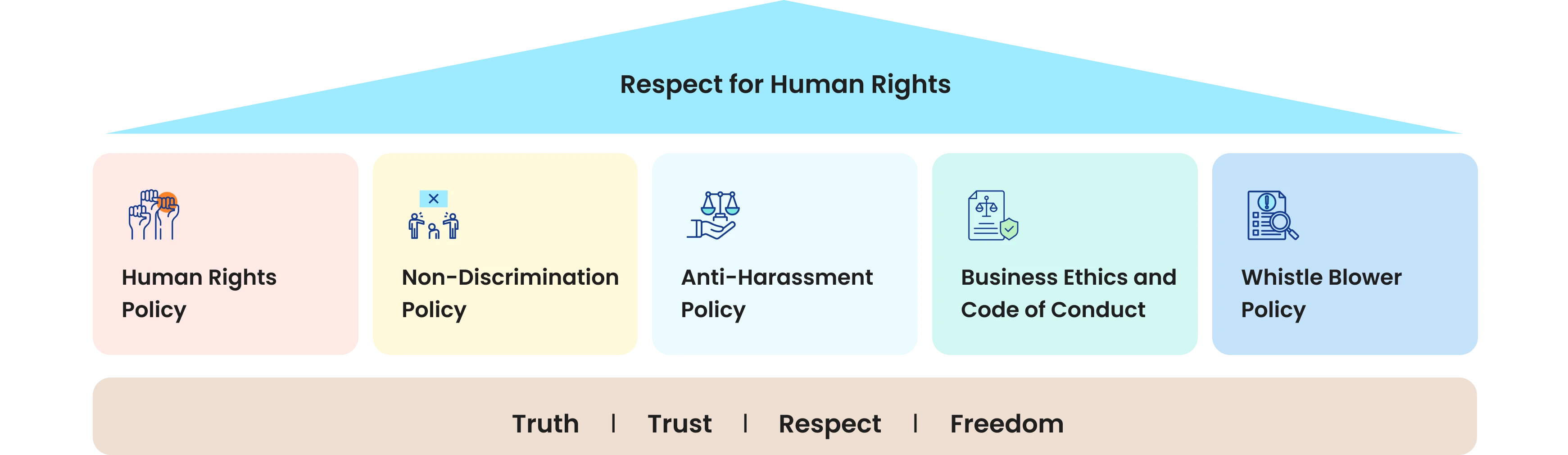
The Company has established policies for human rights which set out basic human rights principles, including no slavery, a peaceful and conducive work environment, equal opportunity for all employees, no discrimination and fairness at workplaces.
MEGA’s human rights framework includes:
Human Rights Due Diligence and Risk Assessment
MEGA conducts Human Rights Due Diligence to identify, assess and reduce potential human rights risks within the Company and in supplier workplaces. The process includes policy commitment, Human Rights Declaration, questionnaire-based risk assessment, evaluation of responses, remedial actions and monitoring.
In 2025, 100% of units within the Company were covered by the Human Rights Due Diligence process, and 100% of location heads signed the Human Rights Declaration. MEGA also disclosed that there were no significant human rights issues during the year.
At the same time, MEGA’s human rights risk assessment is conducted through questionnaires (e.g. EHS Checklist, Human Rights Compliance Declaration, and Human Rights Checklists), which cover following topics and responses from relevant units. Risks are evaluated based on the responses, and remedial actions are taken to minimize potential violations.
Human Right Risk Assessment
MEGA conducts annual risk and impact assessments to identify actual and potential adverse impacts associated with its business operations, value chain activities, and stakeholder relationships. The assessment covers risks that may affect employee well-being, the Company’s reputation, long-term business performance, and compliance with applicable laws, regulations, and internationally recognized standards, including the United Nations Guiding Principles on Business and Human Rights (UNGPs).
The assessment outcomes are integrated into the Company’s risk management processes, with relevant functions responsible for monitoring, reviewing, and implementing mitigation measures to prevent or minimize identified risks. Through ongoing oversight and due diligence processes, MEGA seeks to proactively address potential impacts before they occur and strengthen its commitment to responsible and sustainable business practices.
Human Rights Across the Supply Chain
MEGA extends human rights expectations to supplier workplaces. The Company has developed evaluation questionnaires for suppliers before they are included in the Approved Suppliers List.
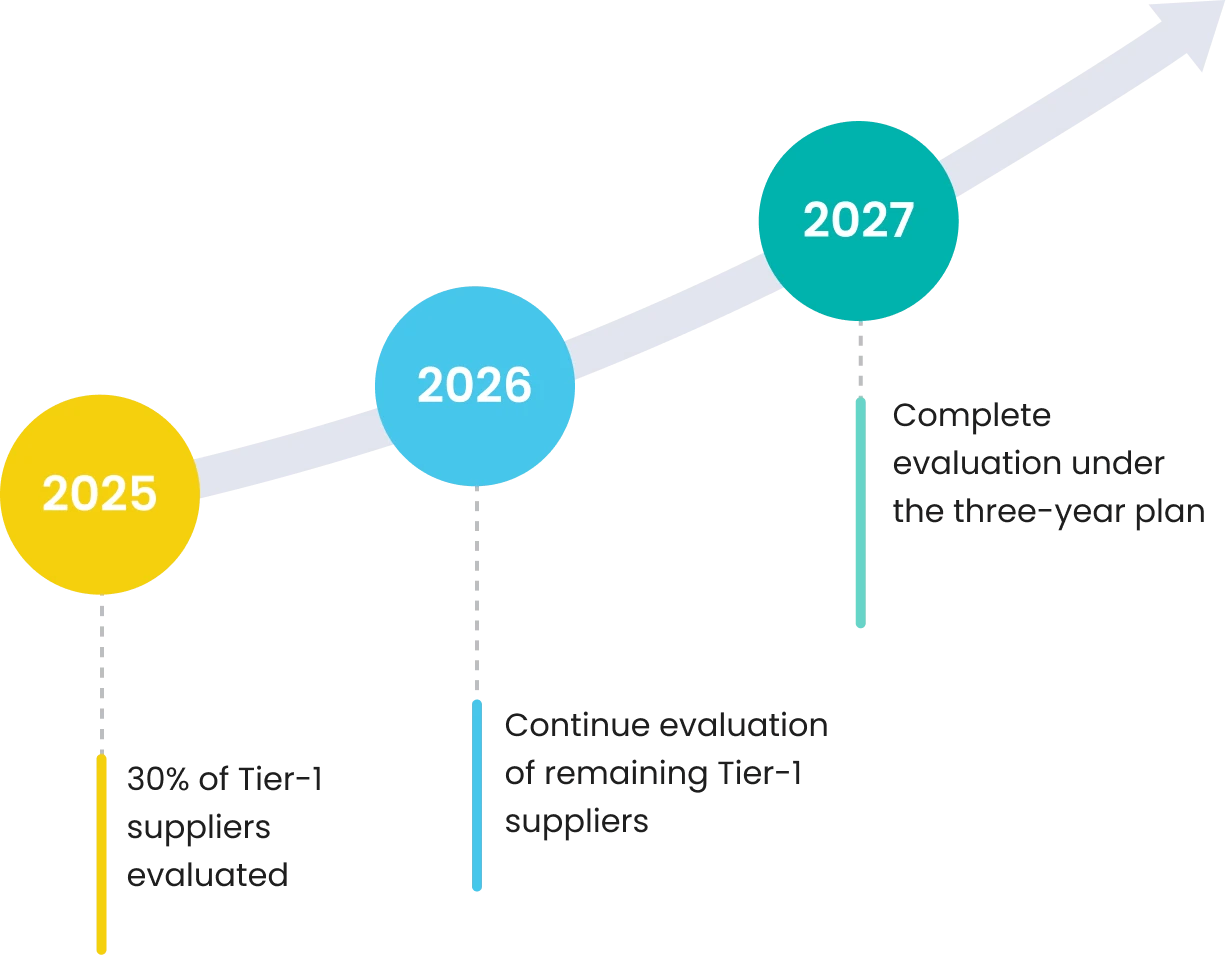
In 2025, 30% of Tier-1 suppliers were evaluated. The remaining suppliers are planned to be evaluated in 2026 and 2027. MEGA has a system to evaluate 100% of suppliers over a three-year period, based on plans developed in advance.
MEGA also conducts supplier audits at least once every three years under a three-year rotation plan to cover 100% of suppliers. In 2025, MEGA conducted audits of 52 suppliers. Supplier audits included checks on Good Manufacturing Practices, Human Rights, and Employee Health and Safety.
Supplier Human Rights Evaluation Roadmap
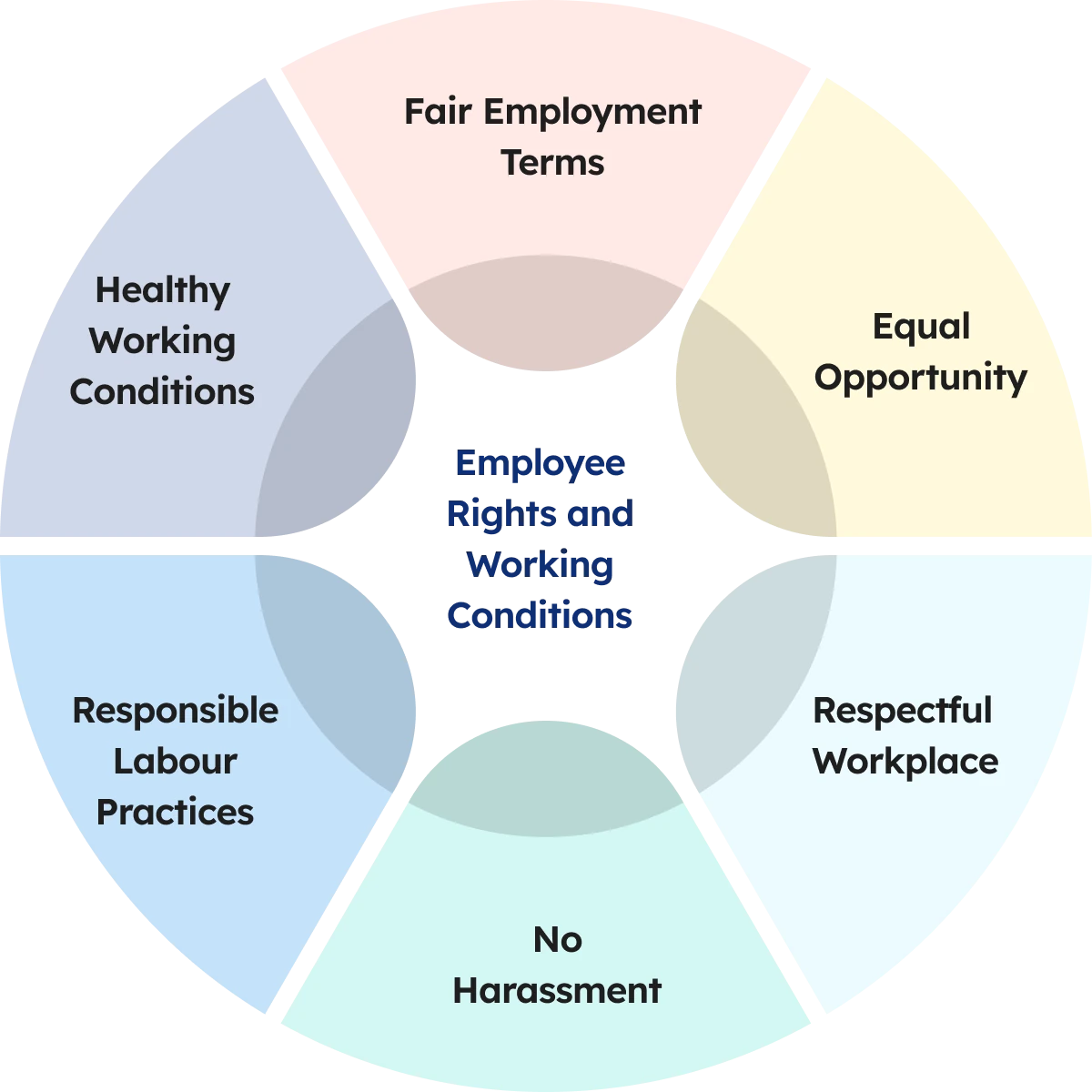
Employee Rights and Working Conditions
MEGA respects human rights and promotes responsible labour practices across the countries where the Company operates. The Company observes applicable labour laws in its countries of operation and files required reports within due dates. MEGA’s employment practices are guided by fairness, transparency, non-discrimination and respect for people.
The Company’s employment terms are required to be clear in writing and free from discrimination, while recruitment procedures shall be transparent and fair. MEGA provides equal employment opportunity within the framework of the law of the country where it is located. People of any gender, race, caste, religion or nationality shall be considered for employment and treated as equals at work. Any behavior that violates this principle is treated as hostile, and appropriate management action may be taken.
MEGA strictly prohibits sexual harassment and any other kind of harassment (non-sexual harassment) of employees by any person in the workplace or while conducting the Company’s business. The Company’s Business Ethics and Code of Conduct and Non-Discrimination and Non-Harassment Policy prohibit discrimination on any grounds

The Company also promotes healthy labour practices. MEGA and its employees shall comply with relevant labour laws. The Company strongly discourages exploitation of children, child labour, physical abuse and any other form of services that may be involuntary in nature. MEGA provides healthy working conditions as required by law and beyond, and management may take strict disciplinary action in the event of violation.
In terms of the working hours, MEGA respects and observes the labour laws of the countries where it operates, including legal requirements related to employment practices and workplace conditions. In relation to working hours and overtime, the Company discloses overtime payments as part of employee remuneration and benefits, reflecting that overtime is managed as part of employment compensation and labour practices. MEGA will continue to manage working hours, overtime and related employment practices in accordance with applicable local laws and internal processes.
Furthermore, MEGA provides healthy and hygienic working conditions and has a clearly laid down Health, Safety and Environment Policy. In the context of employee rights and working conditions, the policy supports compliance with laws relating to employee safety and health, safe handling and disposal of hazardous and toxic materials, and suitable factory working conditions such as lighting, layouts and health signs.
Employee Rights and Working Conditions
Grievance, Whistleblowing and Remediation
MEGA provides channels for employees and affected persons to raise concerns.

Any employee or affected person may write to
- audit.committee@megawecare.com
- whistleblow@megawecare.com
-
or can file complain or suggestion via: whistleblowing channel
MEGA provides safe channels for employees and affected persons to raise concerns, supported by the Company’s Non-retaliation Policy, which protects individuals who report issues in good faith. To ensure that employees understand the process, MEGA conducts regular training on the Whistle Blower Policy and assigns related training programs through its Learning Management System.
When a concern is raised, MEGA follows a standard operating procedure for investigation and reporting. Investigation results are reported to the Audit Committee within 30 days, or within an extended period as agreed where additional time is required
In 2025, MEGA disclosed no significant human rights issues during the year. The Company also reported one whistleblowing incident in the governance incident table, and the case was closed.

Human Rights Performance
| Area | 2025 Status |
|---|---|
| Units covered by Human Rights Due Diligence process | 100% |
| Location heads signed Human Rights Declaration | 100% |
| Significant human rights issues | No significant issues |
| Tier-1 supplier evaluation | 30% completed |
| Human rights training | 90 hours |
| Supplier audits conducted | 52 suppliers |
Disclosed Target / Management Focus
MEGA continues to strengthen human rights management across its own operations and supply chain. The Company’s disclosed targets and management focus areas are summarized below.

Continue human rights risk assessment within the Company and in supplier workplaces through questionnaire-based assessment, evaluation of responses, remedial actions and monitoring.

Maintain awareness and accountability across locations through the Human Rights Declaration signed by location heads.

Complete evaluation of the remaining Tier-1 suppliers in 2026 and 2027, in line with MEGA’s three-year plan to evaluate 100% of suppliers.

Continue supplier audits at least once every three years, covering Good Manufacturing Practices, Human Rights, and Employee Health and Safety.

Maintain whistleblowing channels, non-retaliation protection, investigation procedures and reporting to the Audit Committee within the defined timeline.

Continue human rights and business ethics-related training to strengthen employee understanding of responsible conduct, non-discrimination, anti-harassment, whistleblowing and related policy expectations.
Related Documents