











อาชีวอนามัยและความปลอดภัย

ภาพรวมด้านอาชีวอนามัยและความปลอดภัย
ในปี 2568 เมก้ายังคงติดตามอาชีวอนามัยและความปลอดภัยผ่านทั้งข้อมูลผลการดำเนินงานตาม GRI และประเด็นเด่นด้านความปลอดภัยเชิงปฏิบัติการ ข้อมูลผลการดำเนินงานแสดงให้เห็นว่าพนักงานและผู้รับเหมาครอบคลุมอยู่ภายใต้ระบบการจัดการ SSHE อย่างไร และมีการติดตามผลลัพธ์ด้านความปลอดภัยอย่างไร ประเด็นเด่นด้านการปฏิบัติงานแสดงถึงงานด้านความปลอดภัยที่ดำเนินการในระหว่างปี รวมถึงการฝึกอบรม ผลการดำเนินงานด้านความปลอดภัยของผู้รับเหมา การสนับสนุนการปรับเปลี่ยนพื้นที่ และกิจกรรมการปฏิบัติตามข้อกำหนดด้านความปลอดภัย
- การฝึกอบรมด้านความปลอดภัย
- การเข้าร่วมการฝึกอบรมด้านความปลอดภัย
- ระยะเวลาการทำงานของผู้รับเหมาที่ปลอดอุบัติเหตุ
- ชั่วโมงการทำงานของผู้รับเหมาที่ปลอดอุบัติเหตุตั้งแต่ปี 2566
- การสนับสนุนการปรับเปลี่ยนพื้นที่ใหม่และพื้นที่ที่มีการเปลี่ยนแปลง
- มาตรฐานการปฏิบัติตามข้อกำหนดด้านความปลอดภัย
- ระบบการจัดการสิ่งแวดล้อม ISO 14001:2015
ความท้าทายและโอกาส
ความเสี่ยงด้านความปลอดภัยเปลี่ยนแปลงไปตามการดำเนินงาน
ความเสี่ยงด้านความปลอดภัยเปลี่ยนแปลงไปตามการดำเนินงาน ในสภาพแวดล้อมการปฏิบัติงานของเมก้า การจัดการความปลอดภัยต้องครอบคลุมกิจกรรมการผลิตตามปกติ งานในห้องปฏิบัติการ การจัดการสารเคมี การใช้งานเครื่องจักร การบำรุงรักษา ผู้รับเหมา ระบบฉุกเฉิน และพื้นที่ทำงานใหม่หรือพื้นที่ที่มีการปรับเปลี่ยน สภาพที่ไม่ปลอดภัยเพียงเล็กน้อยอาจสร้างความเสี่ยงต่อผู้คน ส่งผลต่อความน่าเชื่อถือของอุปกรณ์ ขัดขวางการดำเนินงาน หรือทำให้ความเชื่อมั่นในสถานที่ทำงานลดลง
ในขณะเดียวกัน ความท้าทายด้านความปลอดภัยล้วนเป็นโอกาสในการปรับปรุงวิธีการทำงานของเมก้า การประเมินความเสี่ยงช่วยให้ทีมเข้าใจอันตรายก่อนเริ่มงาน การควบคุมผู้รับเหมาช่วยให้งานที่จ้างภายนอกมีความปลอดภัยมากขึ้น การเรียนรู้จากอุบัติการณ์ช่วยป้องกันการเกิดซ้ำ การฝึกซ้อมฉุกเฉินและการตรวจสอบระบบช่วยยกระดับความพร้อม และการฝึกอบรมด้านความปลอดภัยช่วยเปลี่ยนกฎระเบียบให้เป็นพฤติกรรมประจำวัน
สำหรับเมก้า โอกาสคือการสร้างวัฒนธรรมความปลอดภัยที่ปฏิบัติได้จริง มองเห็นได้ และต่อเนื่อง เป็นวัฒนธรรมที่พนักงานและผู้รับเหมาเข้าใจความเสี่ยง ปฏิบัติตามมาตรการควบคุม รายงานการกระทำและสภาพที่ไม่ปลอดภัย และมีส่วนช่วยปรับปรุงสถานที่ทำงาน
อันตรายจากการผลิตและการดำเนินงาน
การประเมินความเสี่ยง การวิเคราะห์ความปลอดภัยของงาน และคำแนะนำการปฏิบัติงาน
ความเสี่ยงจากการจัดการสารเคมีและการรั่วไหล
การฝึกอบรมด้านอันตรายจากสารเคมีและการรั่วไหล
ผู้รับเหมาและงานที่มีความเสี่ยงสูง
การควบคุมความปลอดภัยของผู้รับเหมาและใบอนุญาตทำงาน
พื้นที่ทำงานใหม่หรือพื้นที่ที่มีการปรับเปลี่ยน
การทบทวนและสนับสนุนด้านความปลอดภัยสำหรับการปรับเปลี่ยนพื้นที่
ความเสี่ยงจากไฟไหม้และเหตุฉุกเฉิน
อุปกรณ์ป้องกันอัคคีภัย การสื่อสารฉุกเฉิน และการฝึกซ้อมอพยพ
การกระทำที่ไม่ปลอดภัย สภาพที่ไม่ปลอดภัย และเหตุการณ์เกือบเกิดอุบัติเหตุ
การรายงาน การเรียนรู้ และการดำเนินการแก้ไข
เหตุใดอาชีวอนามัยและความปลอดภัยจึงมีความสำคัญต่อเมก้า
เมก้าระบุให้อาชีวอนามัยและความปลอดภัยเป็นประเด็นสาระสำคัญด้านสังคม โดยมีจุดมุ่งเน้นในการขจัดหรือลดการบาดเจ็บของพนักงาน การเสียชีวิต และการขาดงานอันเนื่องมาจากการบาดเจ็บในสถานที่ทำงาน สิ่งนี้ทำให้อาชีวอนามัยและความปลอดภัยเชื่อมโยงโดยตรงกับความรับผิดชอบต่อผู้คน ความต่อเนื่องในการดำเนินงาน และผลการดำเนินงานด้านความยั่งยืนของบริษัท
สำหรับบริษัทที่พัฒนา ผลิต ทำการตลาด จำหน่าย และกระจายผลิตภัณฑ์สุขภาพ ความปลอดภัยยังเชื่อมโยงกับคุณภาพและความไว้วางใจ สถานที่ทำงานที่ปลอดภัยสนับสนุนการดำเนินงานอย่างมีวินัย การดำเนินงานอย่างมีวินัยสนับสนุนคุณภาพผลิตภัณฑ์ การปฏิบัติตามกฎระเบียบ และการจัดหาผลิตภัณฑ์อย่างน่าเชื่อถือ เมื่อพนักงานและผู้รับเหมาทำงานภายใต้สภาพแวดล้อมที่ปลอดภัย เมก้าสามารถคุ้มครองผู้คน รักษาความต่อเนื่อง และส่งมอบผลิตภัณฑ์สุขภาพที่มีคุณภาพให้แก่ตลาดที่บริษัทให้บริการได้ดียิ่งขึ้น
การจัดการความปลอดภัยยังมีความรับผิดชอบในวงกว้าง การเตรียมความพร้อมรับเหตุฉุกเฉิน การจัดการวัสดุอันตรายอย่างปลอดภัย การป้องกันอัคคีภัย การติดตามสภาพแวดล้อมในสถานที่ทำงาน และการจัดการสิ่งแวดล้อมช่วยลดความเสี่ยงต่อผู้คนภายในสถานประกอบการของเมก้าและผู้คนที่อยู่รอบสถานประกอบการ
แนวทางการจัดการด้านการจัดการด้านอาชีวอนามัยและความปลอดภัย
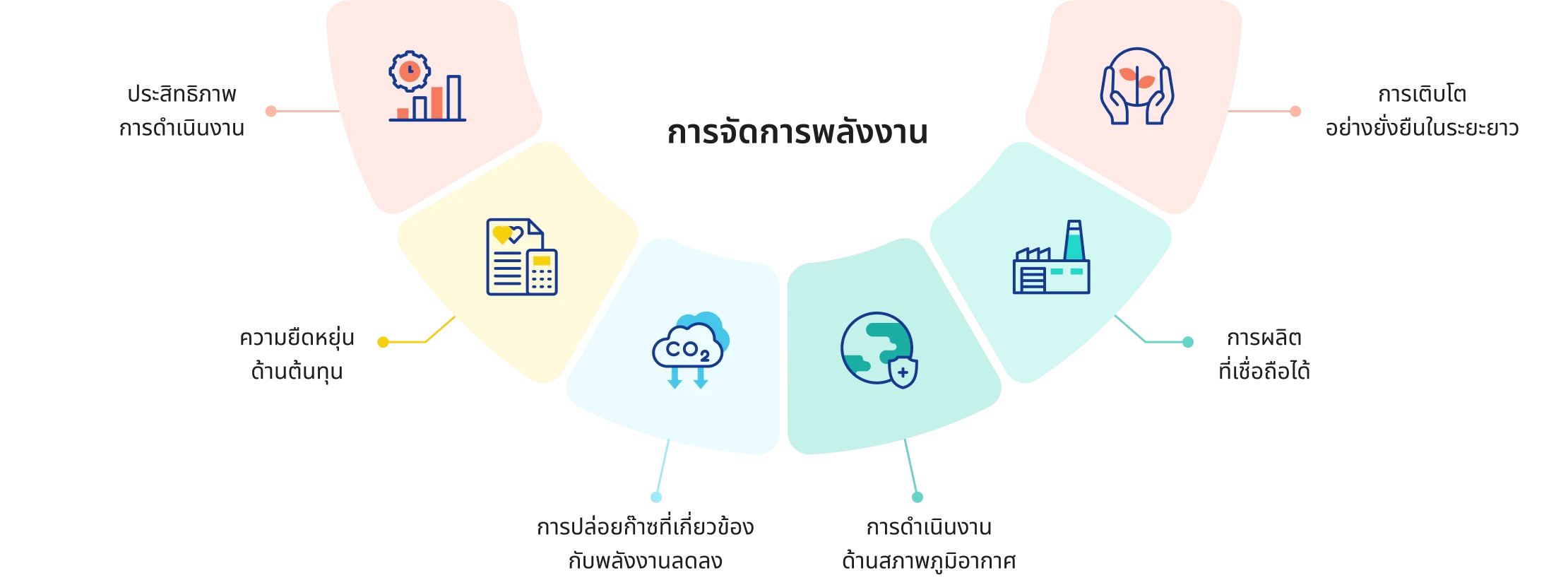
เมก้าบริหารจัดการอาชีวอนามัยและความปลอดภัยผ่านระบบที่ปฏิบัติได้จริง ซึ่งเชื่อมโยงการวางแผน การควบคุมความเสี่ยง การฝึกอบรม การตรวจสอบ ความพร้อมรับเหตุฉุกเฉิน และการเรียนรู้ ระบบการจัดการ SSHE เป็นพื้นฐานในการครอบคลุมพนักงานและผู้รับเหมา ขณะที่การกำกับดูแลด้านความปลอดภัยและคณะกรรมการความปลอดภัยช่วยแปลงความคาดหวังให้เป็นแนวปฏิบัติในการดำเนินงาน
แนวทางดังกล่าวเริ่มต้นจากการทำความเข้าใจความเสี่ยง เมก้าใช้การประเมินความเสี่ยง การวิเคราะห์ความปลอดภัยของงาน คำแนะนำการปฏิบัติงาน และการปฏิบัติด้านความปลอดภัยในพื้นที่ปฏิบัติงานเพื่อระบุอันตรายและเสริมสร้างมาตรการควบคุม การควบคุมเหล่านี้ได้รับการสนับสนุนด้วยการฝึกอบรม การโค้ชหน้างาน การบำรุงรักษาอุปกรณ์ความปลอดภัย และการตรวจสอบอย่างสม่ำเสมอ บริษัทยังบูรณาการความปลอดภัยเข้ากับพื้นที่ทำงานใหม่หรือพื้นที่ที่มีการเปลี่ยนแปลง เพื่อให้การเปลี่ยนแปลงในการดำเนินงานได้รับการทบทวนจากมุมมองด้านความปลอดภัยก่อนที่จะกลายเป็นส่วนหนึ่งของการทำงานประจำวัน
ความปลอดภัยของผู้รับเหมาได้รับการบริหารจัดการเป็นส่วนหนึ่งของเส้นทางด้านความปลอดภัยเดียวกัน งานของผู้รับเหมาต้องมีใบอนุญาต การกำกับดูแล และการควบคุมที่ชัดเจน เนื่องจากผู้รับเหมาอาจทำงานบำรุงรักษา งานปรับเปลี่ยน หรือกิจกรรมอื่นที่อาจก่อให้เกิดงานที่มีความเสี่ยงสูง ผลการดำเนินงานด้านความปลอดภัยของผู้รับเหมาของเมก้าในปี 2568 สะท้อนถึงความใส่ใจในประเด็นนี้ โดยงานของผู้รับเหมาปลอดอุบัติเหตุเป็นเวลา 1,229 วัน และ 390,936 ชั่วโมงการทำงานตั้งแต่ปี 2566
การเตรียมความพร้อมรับเหตุฉุกเฉินเป็นอีกส่วนหนึ่งของแนวทางการจัดการ แผนความปลอดภัยของเมก้าครอบคลุมระบบสัญญาณแจ้งเหตุเพลิงไหม้ ไฟส่องสว่างฉุกเฉิน ระบบไฟฟ้า ระบบอาคาร ระบบปั๊มน้ำดับเพลิง การดับเพลิงขั้นพื้นฐาน การปฐมพยาบาลและ CPR รวมถึงการฝึกซ้อมดับเพลิงและการฝึกซ้อมอพยพ กิจกรรมเหล่านี้ช่วยเตรียมความพร้อมให้พนักงานและบุคลากรที่เกี่ยวข้องสามารถตอบสนองต่อเหตุการณ์ไม่คาดคิดได้
เมก้ายังมองอุบัติการณ์และสภาพที่ไม่ปลอดภัยเป็นโอกาสในการเรียนรู้ ประเด็นเด่นด้าน OHS ในปี 2568 ระบุบทเรียนจากกรณีที่เกี่ยวข้องกับแรงดันเกิน การติดไฟของสารเคมีไวไฟ การบาดเจ็บที่เกี่ยวข้องกับเครื่องจักร และความน่าเชื่อถือของระบบสัญญาณแจ้งเหตุเพลิงไหม้ บทเรียนเหล่านี้ถูกนำมาใช้เพื่อเสริมสร้างมาตรการควบคุม ปิดช่องว่าง และลดความเสี่ยงของเหตุการณ์ซ้ำ
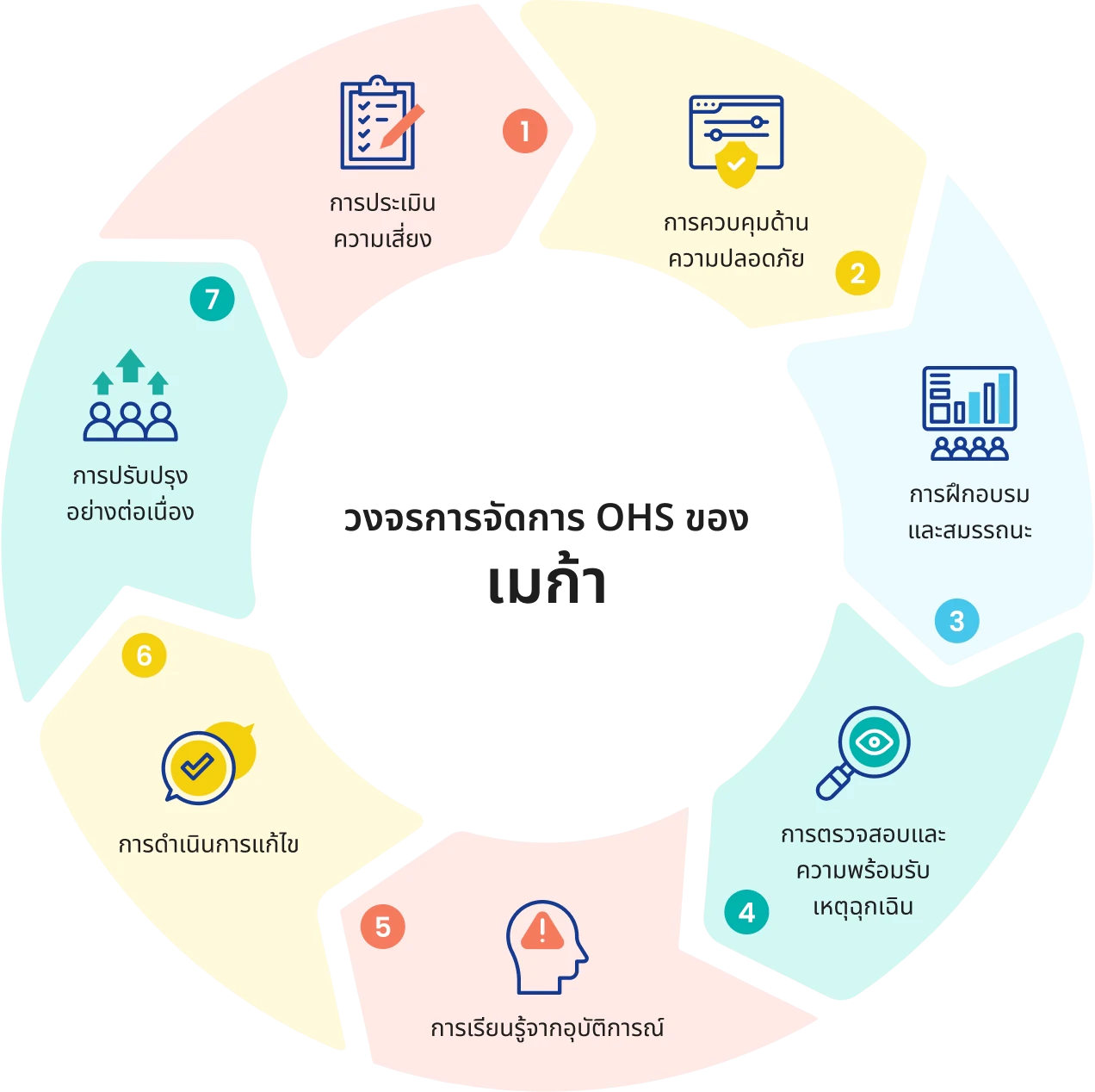
วงจรการจัดการ OHS ของเมก้า
จากระบบความปลอดภัยสู่การปฏิบัติในชีวิตประจำวัน
ระบบความปลอดภัยจะเกิดผลได้ก็ต่อเมื่อกลายเป็นส่วนหนึ่งของพฤติกรรมประจำวัน ดังนั้น เมก้าจึงเชื่อมโยงแนวทางการจัดการ OHS เข้ากับการปฏิบัติจริงในพื้นที่ผลิต ห้องปฏิบัติการ คลังสินค้า และพื้นที่ทำงานของผู้รับเหมา
การกำกับดูแลด้านความปลอดภัยและ KPI กำหนดทิศทาง การประเมินความเสี่ยง การวิเคราะห์ความปลอดภัยของงาน และคำแนะนำการปฏิบัติงานช่วยให้ทีมเข้าใจสิ่งที่อาจผิดพลาดและวิธีป้องกัน การฝึกอบรมด้านความปลอดภัยช่วยให้พนักงานและผู้รับเหมาทำงานด้วยความตระหนัก การตรวจสอบและการบำรุงรักษาช่วยระบุช่องว่างในอุปกรณ์ สภาพแวดล้อมในสถานที่ทำงาน และระบบฉุกเฉิน การเรียนรู้จากอุบัติการณ์ช่วยให้บริษัทเข้าใจสาเหตุรากเหง้าและป้องกันการเกิดซ้ำ
การปฏิบัติในชีวิตประจำวันนี้ยังได้รับการสนับสนุนจากจุดมุ่งเน้นด้านความปลอดภัยของบริษัทในปี 2569 เมก้ามีแผนที่จะปรับปรุงการดำเนินการตามมาตรฐานความปลอดภัย การป้องกันเครื่องจักรและการป้องกันการข้ามระบบความปลอดภัย การรายงานการกระทำที่ไม่ปลอดภัยและสภาพที่ไม่ปลอดภัย การรายงานเหตุการณ์เกือบเกิดอุบัติเหตุ ระบบสื่อสารฉุกเฉิน ความน่าเชื่อถือของระบบสัญญาณแจ้งเหตุเพลิงไหม้ การปฏิบัติตามข้อกำหนดด้านแสงสว่าง และสมรรถนะของเจ้าหน้าที่ความปลอดภัย

ความปลอดภัยในการดำเนินงานประจำวัน
เส้นทาง OHS: จากการควบคุมสู่การสร้างวัฒนธรรมความปลอดภัย
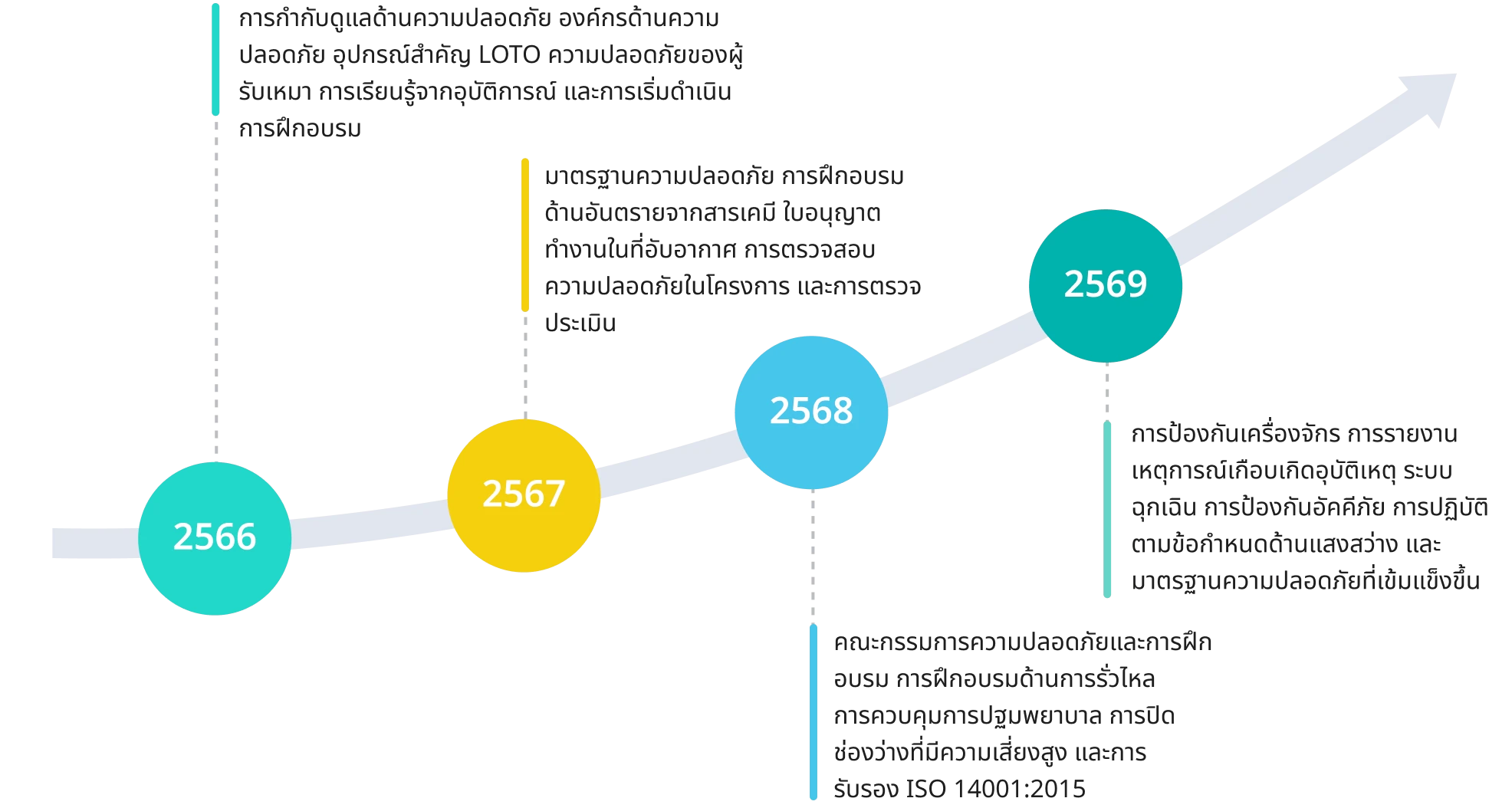
เส้นทาง OHS ของเมก้าแสดงให้เห็นว่าการจัดการความปลอดภัยพัฒนาขึ้นอย่างไรในช่วงเวลา ในปี 2566 บริษัทได้เสริมสร้างพื้นฐานด้านการกำกับดูแลความปลอดภัย องค์กรด้านความปลอดภัย อุปกรณ์ความปลอดภัยที่สำคัญ การล็อกและติดป้ายเตือน/การตัดแยกพลังงาน ความปลอดภัยของผู้รับเหมา การจัดการอุบัติการณ์ และการฝึกอบรมด้านความปลอดภัย ในปี 2567 จุดมุ่งเน้นขยายไปสู่การปฏิบัติตามมาตรฐานความปลอดภัย การฝึกอบรมด้านอันตรายจากสารเคมี ขั้นตอนการทำงานในที่อับอากาศ การตรวจสอบ การบูรณาการความปลอดภัยในโครงการ และการตรวจประเมิน
ในปี 2568 เมก้ายังคงเสริมสร้างงานของคณะกรรมการความปลอดภัย การฝึกอบรมด้านความปลอดภัย การฝึกอบรมด้านอันตรายจากสารเคมีและการรั่วไหล การควบคุมห้องพยาบาลและการปฐมพยาบาล อุปกรณ์ความปลอดภัยที่สำคัญ การปิดช่องว่างที่มีความเสี่ยงสูง และการติดตามผล บริษัทยังได้พัฒนาระบบการจัดการสิ่งแวดล้อมและได้รับการรับรอง ISO 14001:2015
จุดมุ่งเน้นในปี 2569 ยังคงเดินหน้าต่อจากเส้นทางนี้ด้วยการดำเนินการตามมาตรฐานความปลอดภัย การป้องกันเครื่องจักร การรายงานการกระทำที่ไม่ปลอดภัยและสภาพที่ไม่ปลอดภัย การรายงานเหตุการณ์เกือบเกิดอุบัติเหตุ อุปกรณ์ป้องกันอัคคีภัย ระบบสื่อสารฉุกเฉิน ความน่าเชื่อถือของระบบสัญญาณแจ้งเหตุเพลิงไหม้ การปฏิบัติตามข้อกำหนดด้านแสงสว่าง ความยั่งยืนของ ISO 14001:2015 เป้าหมายด้านสิ่งแวดล้อม และการลดต้นทุน
ไทม์ไลน์เส้นทาง OHS
ความปลอดภัยของผู้รับเหมา
ผู้รับเหมารวมอยู่ในการเปิดเผยข้อมูลด้านอาชีวอนามัยและความปลอดภัยของเมก้า เนื่องจากงานของผู้รับเหมาสามารถส่งผลต่อทั้งผลการดำเนินงานด้านความปลอดภัยและความต่อเนื่องในการดำเนินงาน ในปี 2568 ผู้รับเหมา 27 รายครอบคลุมอยู่ภายใต้ระบบการจัดการ SSHE โดยมีชั่วโมงการทำงานของผู้รับเหมา 71,787 ชั่วโมง
ข้อมูลผลการดำเนินงานแสดงให้เห็นว่าไม่มีผู้รับเหมาเสียชีวิต ไม่มีการบาดเจ็บจากการทำงานที่มีผลกระทบร้ายแรงของผู้รับเหมา ไม่มีการบาดเจ็บที่ต้องบันทึกทั้งหมดของผู้รับเหมา ไม่มีวันทำงานที่สูญเสียของผู้รับเหมา และไม่มีการเจ็บป่วยจากการทำงานที่ต้องบันทึกของผู้รับเหมา ประเด็นเด่นด้านความปลอดภัยเชิงปฏิบัติการของเมก้ายังรายงานว่างานของผู้รับเหมาปลอดอุบัติเหตุเป็นเวลา 1,229 วัน คิดเป็น 390,936 ชั่วโมงการทำงานตั้งแต่ปี 2566
ผลการดำเนินงานนี้สะท้อนถึงความสำคัญของการควบคุมความปลอดภัยของผู้รับเหมา ใบอนุญาต และการกำกับดูแล ซึ่งเป็นส่วนหนึ่งของเส้นทางการจัดการ OHS ที่กว้างขึ้นของเมก้า
ภาพรวมความปลอดภัยของผู้รับเหมา
การดำเนินการด้านความยั่งยืน


ผลการดำเนินงานด้านอาชีวอนามัยและความปลอดภัย
| ตัวชี้วัด | ผลการดำเนินงานปี 2568 |
|---|---|
| พนักงานที่ครอบคลุมโดยระบบการจัดการ SSHE | 954 |
| ผู้รับเหมาที่ครอบคลุมโดยระบบการจัดการ SSHE | 27 |
| ชั่วโมงการทำงานของพนักงาน | 2,390,689 |
| ชั่วโมงการทำงานของผู้รับเหมา | 71,787 |
| พนักงานเสียชีวิตจากการบาดเจ็บจากการทำงาน | 0 |
| ผู้รับเหมาเสียชีวิตจากการบาดเจ็บจากการทำงาน | 0 |
| การบาดเจ็บจากการทำงานที่มีผลกระทบร้ายแรง | พนักงาน 0 / ผู้รับเหมา 0 |
| จำนวนกรณีการบาดเจ็บที่ต้องบันทึกทั้งหมดของพนักงาน | 1 |
| จำนวนกรณีการบาดเจ็บที่ต้องบันทึกทั้งหมดของผู้รับเหมา | 0 |
| อัตราการบาดเจ็บที่ต้องบันทึกทั้งหมดของพนักงาน | 0.42 |
| อัตราการบาดเจ็บที่ต้องบันทึกทั้งหมดของผู้รับเหมา | 0 |
| จำนวนวันทำงานที่สูญเสียของพนักงาน | 68 |
| จำนวนวันทำงานที่สูญเสียของผู้รับเหมา | 0 |
| อัตราความถี่การบาดเจ็บถึงขั้นหยุดงานของพนักงาน | 0.42 |
| อัตราความถี่การบาดเจ็บถึงขั้นหยุดงานของผู้รับเหมา | 0 |
| การเจ็บป่วยจากการทำงานที่ต้องบันทึก | พนักงาน 0 / ผู้รับเหมา 0 |
| อัตราการขาดงาน | 0.04% |
เป้าหมายที่เปิดเผย / จุดเน้นด้านการบริหารจัดการ
เป้าหมายด้านความปลอดภัยและจุดมุ่งเน้นด้านการบริหารจัดการที่เมก้าเปิดเผยเชื่อมโยงกับการป้องกันอุบัติเหตุ สมรรถนะด้านความปลอดภัย การปฏิบัติตามข้อกำหนด การควบคุมสภาพแวดล้อมในสถานที่ทำงาน และความพร้อมรับเหตุฉุกเฉิน

การลดอุบัติเหตุ ไม่มีกรณีเกิดซ้ำ Target Zero LTA

รักษาและคงไว้ซึ่งการปฏิบัติตามข้อกำหนดด้านความปลอดภัย

พัฒนาสมรรถนะด้านความปลอดภัยของเจ้าหน้าที่ความปลอดภัยใหม่จำนวน 3 คนให้ถึงระดับวิชาชีพ

ปรับปรุงการฝึกอบรมและการรับรองเจ้าหน้าที่ความปลอดภัยสำหรับระดับหัวหน้างานและระดับบริหารตามที่กฎหมายกำหนด

เสริมสร้างการประเมินความเสี่ยง JSA คำแนะนำการปฏิบัติงาน การปฏิบัติด้านความปลอดภัยในพื้นที่ปฏิบัติงาน การฝึกอบรม OJT การบำรุงรักษาอุปกรณ์ความปลอดภัย และ Walk the talk

ดำเนินกิจกรรมที่เกี่ยวข้องกับ IA ISO 14001 การประกันภัย และการติดตาม ISO 14001

ตรวจสอบระบบสัญญาณแจ้งเหตุเพลิงไหม้ ไฟส่องสว่างฉุกเฉิน ระบบไฟฟ้า ระบบอาคาร ปั๊มน้ำดับเพลิง แสงสว่าง เสียง สารเคมี มลพิษทางอากาศ และระบบทำความเย็น

ดำเนินการฝึกอบรมด้านการปฏิบัติตามกฎหมาย การประเมินความเสี่ยง ความปลอดภัยในการใช้รถยก สารเคมีอันตราย การดับเพลิง การปฐมพยาบาล CPR และการฝึกซ้อมอพยพอย่างต่อเนื่อง

ดำเนินการควบคุมความปลอดภัยของผู้รับเหมาและแนวปฏิบัติด้านใบอนุญาตอย่างต่อเนื่อง

เสริมสร้างการรายงานการกระทำที่ไม่ปลอดภัย / สภาพที่ไม่ปลอดภัย และเหตุการณ์เกือบเกิดอุบัติเหตุ เพื่อป้องกันเหตุการณ์ซ้ำ
